

 |
Series Land Rover
(U.S.A./Canada)
|
 |

 or
or 
 Enter Enter
Series 3 Land Rover
Land Rover Series 1 quiz
Land Rover Series 2 quiz Land Rover Series 3 quiz 4x4 offroad quiz Problem you can't solve? Check the Tech Articles About Us Contact Us Disclaimer Humour Last Updated 8/24/16 |
In the July homepage of Series123.com, ways of establishing if a rich gasoline/air mixture was present were discussed. Possible causes of this problem were suggested and an experimental carburettor fuel overflow circuit was described. This month a possible solution to this rich gasoline/air mixture problem is suggested that may be relevent to many Series Land Rover owners. The question then becomes; How do we advance the ignition timing and by how much? Well before adjustments are made, it is important to record the existing ignition timing setting. That way you can always return to your original timing easily if necessary. To do this, simply mark the relative positions of the distributor body and its retaining clamp. The best thing to use for this is white liquid paper correction fluid. It is easily seen and is insoluble in oil and water.
If you have an exhaust digital gas tester you can see if there is an improvement in exhaust emissions. Otherwise, the next thing is to wipe any carbon deposits from inside the COLD exhaust tailpipe and test drive it to see if the previously observed problems, such as reduced acceleration, reduced top speed or stalling have improved. Accelerate between 30-50mph(50-80km/h) and listen carefully for engine ‘pinking’- it's a metallic chattering sound. If heard, retard the ignition a little and road test again until no ‘pinking’ is heard.  ************************ (To see previous homepages visit the Homepage Archives link) ************************** |
|

 Series
quiz
Series
quiz 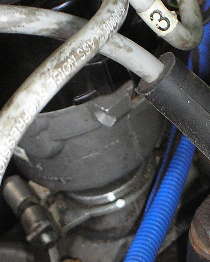
Hitch a Series ride
 Back
to top
Back
to top