|
|
|
Problem: Series Land Rover Engine 'Runs On'
|
|
Petrol engines
It could be badly carbonised combustion chambers in the cylinderhead. The easiest way to check for this is to remove a spark plug, examine the metal electrodes for carbon deposits. Also, shine a torch into the spark plug hole when the cylinder is near the top of its stroke. Turning a Series Land Rover engine over on the starting handle is easier when the plugs are removed.
Decarbonising fuel additives are available, but taking off the cylinderhead and manually cleaning it is the best solution.
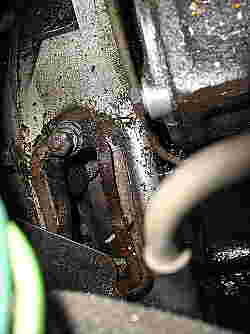
Could be caused by ignition timing being too far advanced. A useful tip for timing the ignition, when the marks are on the flywheel, is to mark the point with 'liquid paper' used for text writing errors. It will remain visible on the flywheel for years (see photo). |
Using spark plugs with the wrong heat specification will cause them to run hotter than normal. They can ignite fuel after the ignition is turned off.
Diesel engines
You may need to stall the engine to stop it. If so, apply the foot brake (not the transmission brake as it will stress the transmission too much), engage gear and slowly release the clutch.
It could be due to worn cylinders, or worn or broken piston ring(s). These all cause high crankcase pressure and this restricts oil from draining back down from the cylinderhead. It results in oil entering the cylinders as fuel.
It could also be a damaged cylinderhead gasket near the oil passage at the rear of the engine. There is no simple diagnosis for this, so consider it as a cause after all other possibilities have been eliminated.
*********************************************
To see previous homepages visit the Series Land Rover Archives
|
|
|