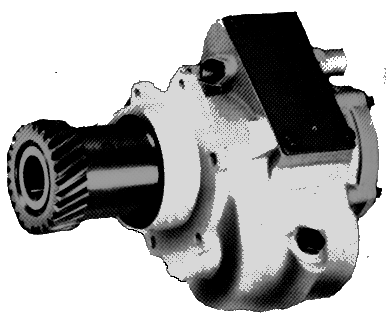
The effect of an overdrive is to reduce engine revs for any particular road speed. This means that normal cruising speeds will take place at lower engine revs and therefore use less fuel. There is no really significant increase in top speed though since the aerodynamics (read lack of) for any Series Land Rover is closely related to that of boxes, and air resistance rules supreme at around 55mph and above.
Lighter Land Rovers and those with petrol rather than diesel engines benefit most from the use of overdrive. The relatively low power and torque of the 2.25 diesel engine compared to the 2.25 petrol version makes the former behave as if it were overgeared in high workload situations.
In situations where torque is important e.g. climbing hills, then an overdrive will not allow the engine to reach optimum revs for max torque until later, as the engine revs are always lower than when the overdrive is not selected: so you are likely to need to change down a gear on hills earlier than usual in order to maximise the torque available from the engine.
If you have changed the standard Series Land Rover differentials from the 4.88 or 4.77 to the 4.3:1 of the Rover car versions, then this will also add to overgearing situations on hills.
Similarly, if oversized tyres have been fitted then the overdrive will cause the engine to struggle earlier.
Fairey Winches Ltd (now known as Superwinch) manufactured their Fairey overdrive specifically for the Series Land Rover. It came onto the market in 1974, a few years after the Series 3 Land Rover was introduced and it was factory fitted as an optional extra. Most secondhand units which come onto the market are likely to have spent their life to-date on a Series 3. You will need to check that the clutch sleeve is still there (inside the output gearshaft) and that the fine splines are not badly worn.
The overdrive unit only has a small oil reservoir and this needs to be checked regularly. Previous owners have often failed to do this and increased wear has resulted.
In summary, you need to consider the specifications of your own Series Land Rover and how you use it, before you decide upon how beneficial fitting an overdrive might be. True, you can always disengage it, but if it would spend most of it's time disengaged then you could consider not fitting one.
It's worth noting that the Fairey Overdrive was not designed for use on the Rover V8 engine, and so if fitted, then it should not be subjected to the full power that the V8 can deliver.


 or
or

 Enter
Enter
 Series
quiz
Series
quiz


 Back
to top
Back
to top